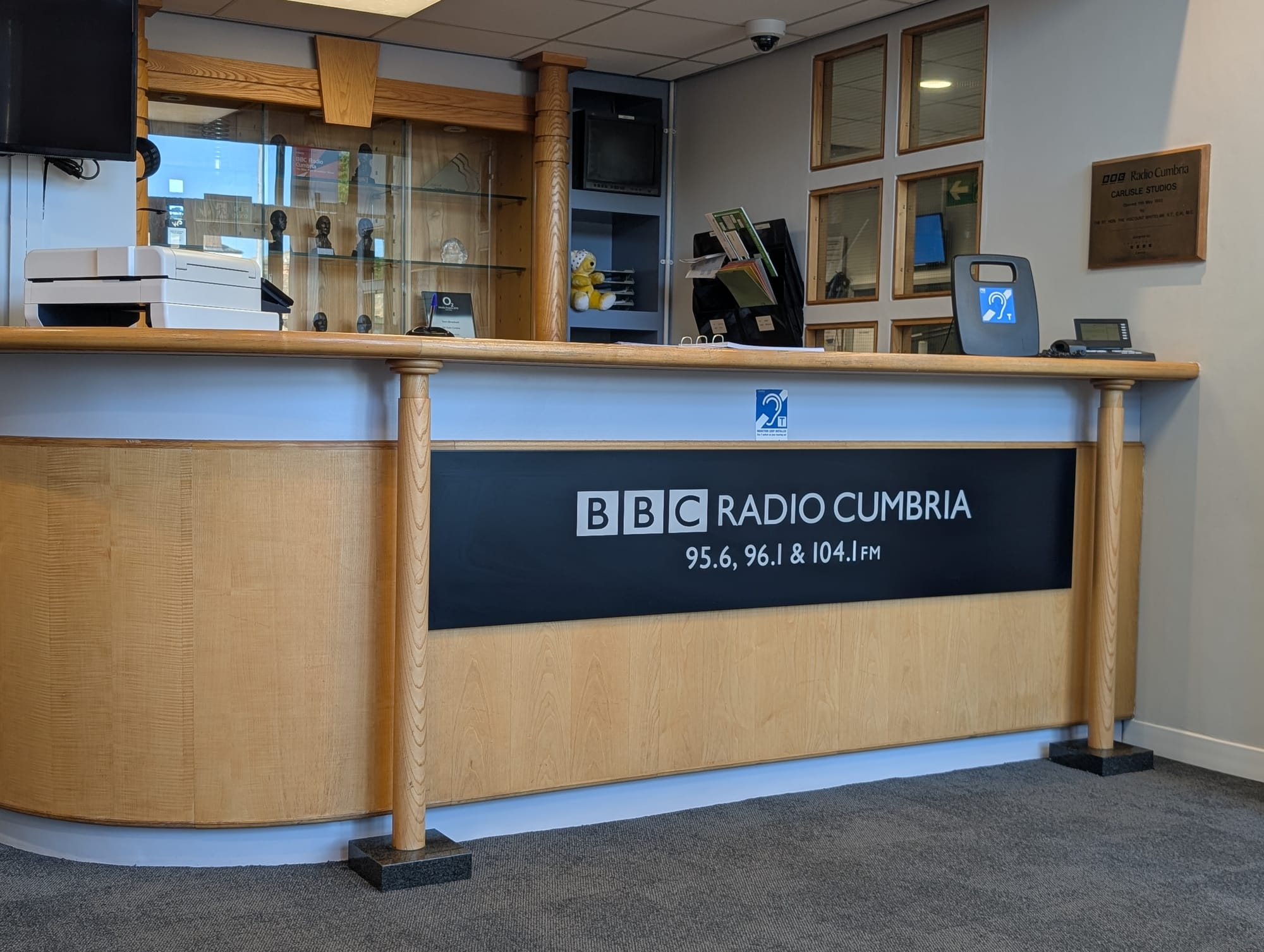
A few weeks ago, Cumbria Youth Alliance’s (CYA) Data and Insights Analyst Jamie Harrison spoke to Steph Finnon on BBC Radio Cumbria as part of their antisocial behaviour week, to talk about what the evidence says about young people in our county.
Here’s a summary of what Jamie spoke about:
Jamie wanted to start with a quote that he shared on air, which read: “We defy anyone who goes about with his eyes open to deny that there is, as never before, an attitude on the part of young folk which is best described as grossly thoughtless, rude and utterly selfish.” [1]
It sounds like it was written only last week, but in fact it was written in 1925, in the Hull Daily Mail. That generation which was being described as rude and selfish went on to fight in the Second World War.
Jamie started here because it’s important context. Human societies have been saying negative things about young people, in almost exactly the same words, for centuries, if not thousands of years. If we’re going to have an honest conversation about antisocial behaviour in Cumbria, we need to begin with the difference between what the evidence actually shows and what we perceive.
What the data tells us
Police-recorded antisocial behaviour across England has fallen by roughly half since 2014. We’ve gone from around two million incidents a year nationally to approximately one million.[2] In Cumbria, we’re among the lowest in the country for recorded antisocial behaviour.[3]
At the same time, 69% of people nationally identified antisocial behaviour as their top crime concern.[4] Perception and reality are moving in opposite directions, and that matters because the policies we build and the resources we invest should be responding to evidence, not anxieties.
What young people are actually telling us
This doesn’t mean there isn’t a problem. There is, but it’s not quite the one that tends to make the headlines.
At CYA, we conduct regular surveys of young people across the county, alongside our partners. Community Alcohol Partnerships (CAP) recently conducted a survey of over 2000 young people in West Cumbria[5], and they told us that at around ages 11 or 12, they feel they have enough things to do. But by 14, 15 and 16, this changes dramatically. More than 50% of 16-year-olds in West Cumbria say there aren’t enough activities available to them. Those who do find something they want to do often cite that there’s a financial cost or it’s somewhere that’s inaccessible via public transport.
A work experience student who came through our office a few weeks ago also offered some insight: her friends mostly spend lunchtimes on their phones rather than talking to each other. When they do want to go outside, they face unfair judgement from passers-by or are moved on by the police who assume, based on what they’ve seen or heard, that a group of young people must be up to something.
“Young people need a reason to care about their communities and not be treated like criminals just for existing.” – Work Experience Student at CYA
Rather than there being an anti-social behaviour crisis, this is a non-social behaviour crisis. Young people haven’t become more dangerous; they’ve retreated indoors, onto screens, video games and social media, because the alternative is a public space that is unwelcome at best, and actively hostile to them at worst.
What happens when that changes?
Youth services in England have been cut by over 70% since 2010, amounting to over a billion pounds nationally.[6] Rural and deprived areas, including many parts of Cumbria, bear the brunt of those cuts, and the third sector has tried to fill those gaps. But they often struggle to embed within their communities when they’re only able to secure limited funding tied to short term projects.
One consequence of that disinvestment, perhaps unintended, is that the streets got quieter. These services were being stripped back, and the number of hours young people spend online and in front of screens increased. That made those cuts easier to justify, as the shock was absorbed by the digital world. But it didn’t make the underlying problem go away.
That may be about to change. If young people lose the online spaces they retreated into, without any new provision to replace it, we may find out very quickly what fifteen years of disinvestment in youth services actually costs.
What works, and what we’re doing about it
Fortunately, we know what works. Through the Better Tomorrows programme, delivered in partnership with the National Lottery and CCF, and with training provided by Youth Focus North West, we have trained 71 youth workers across Cumbria, with 42 more currently in training.[7]
In the communities where those youth workers have been working, antisocial behaviour has fallen at more than double the rate compared to similar areas without that provision.[8]
Harrington Youth Club is one example. Since running their community projects, the surrounding area has seen a 72% reduction in antisocial behaviour.[9] Crucially, many of the young people involved were neurodivergent, precisely the young people most likely to be missed by other services. Their approach was simple: give young people ownership of their community. Let them plant flowerbeds, clean up public spaces, and build something they can be proud of. The outcome of that is creating young people who feel invested in where they live and become stewards for something they care about.
“By being part of a community, and making it better, young people are less likely to be involved in antisocial behaviour.” - Harrington Youth Club
The investment question
Youth services are essential infrastructure, much in the same way roads and broadband are. When you invest in them, communities function better and when you cut them, you pay a higher price downstream; in police time, insurance costs, court costs, and in a generation of young people who grow up feeling unwanted in their own communities.
The evidence from across Cumbria is clear. Provision works. The question for commissioners, councils and government is whether we engage with reality, admit that we made a mistake, and invest in rebuilding the structural scaffolding that allows communities to thrive, or do we continue down the road of shifting the blame onto the people least able to push back against it?
Jamie Harrison is the Data and Insights Analyst at Cumbria Youth Alliance. To find out more about the Better Tomorrows programme and CYA’s work across the county, visit cya.org.uk
Sources
- “The Conduct of Young People”, Hull Daily Mail, 1925. Originally sourced from a Reddit post of a collection of complaints about the youth throughout history. Confirmed source at: British Newspaper Archive
- Home Office / Ministry of Justice,Crime and Policing Act 2026: anti-social behaviour (ASB) factsheet, published 11 May 2026, citing Crime Survey for England and Wales (CSEW) and police-recorded ASB data, year ending December 2025.
- CrimeRate, Anti-Social Behaviour Crime and Safety Statistics, accessed June 2026 - Cumbria ranks 2nd lowest ASB rate nationally (4.26 per 1,000), behind only the City of London (0.39 per 1,000); Greater Manchester listed but with no recorded rate.
- Neighbourhood Watch Network / SimpliSafe, “Crime and Community Survey," reported in Charity Today News, Antisocial behaviour fuels rising crime concerns, 26 February 2025.
- Community Alcohol Partnerships (CAP) survey of young people in West Cumbria, shared with Cumbria Youth Alliance.
- YMCA England & Wales, State of Play report, February 2026.
- CYA Internal data
- CYA Internal analysis of police.uk recorded crime data, October 2022 – April 2026, across 50 Cumbria LSOAs
- CYA Internal data, with query response from Harrington Youth Club about HAF in summer 2025.